
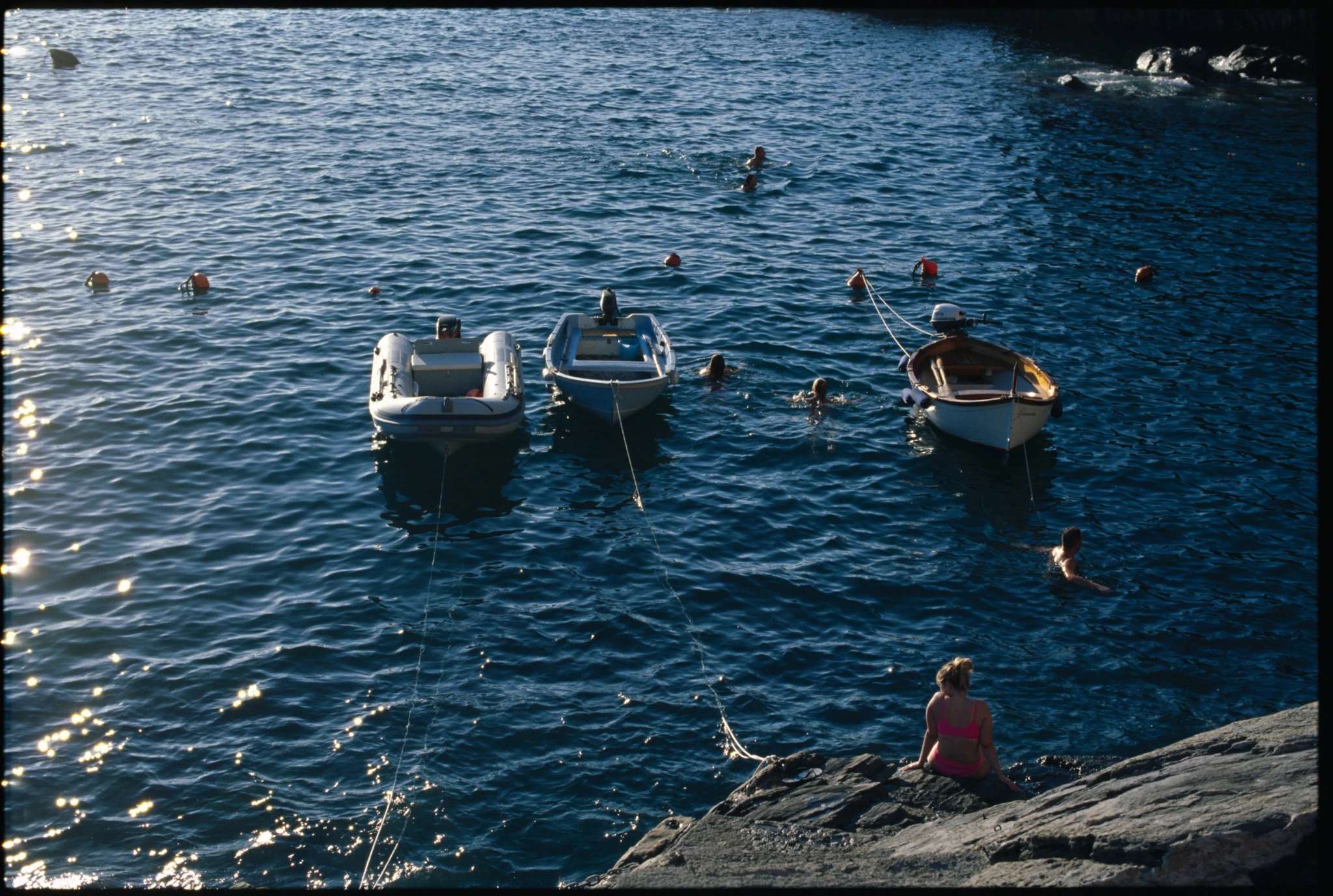
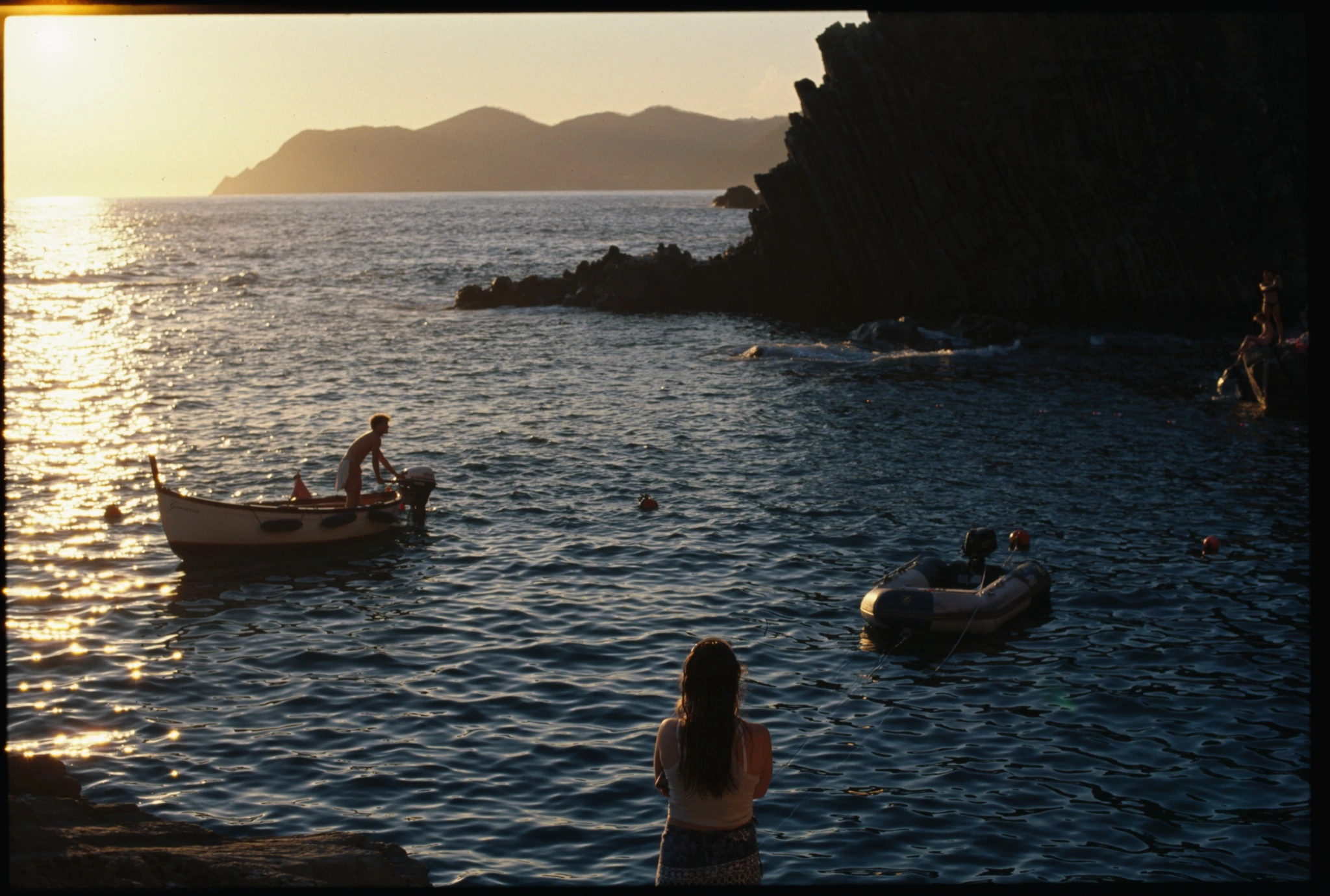
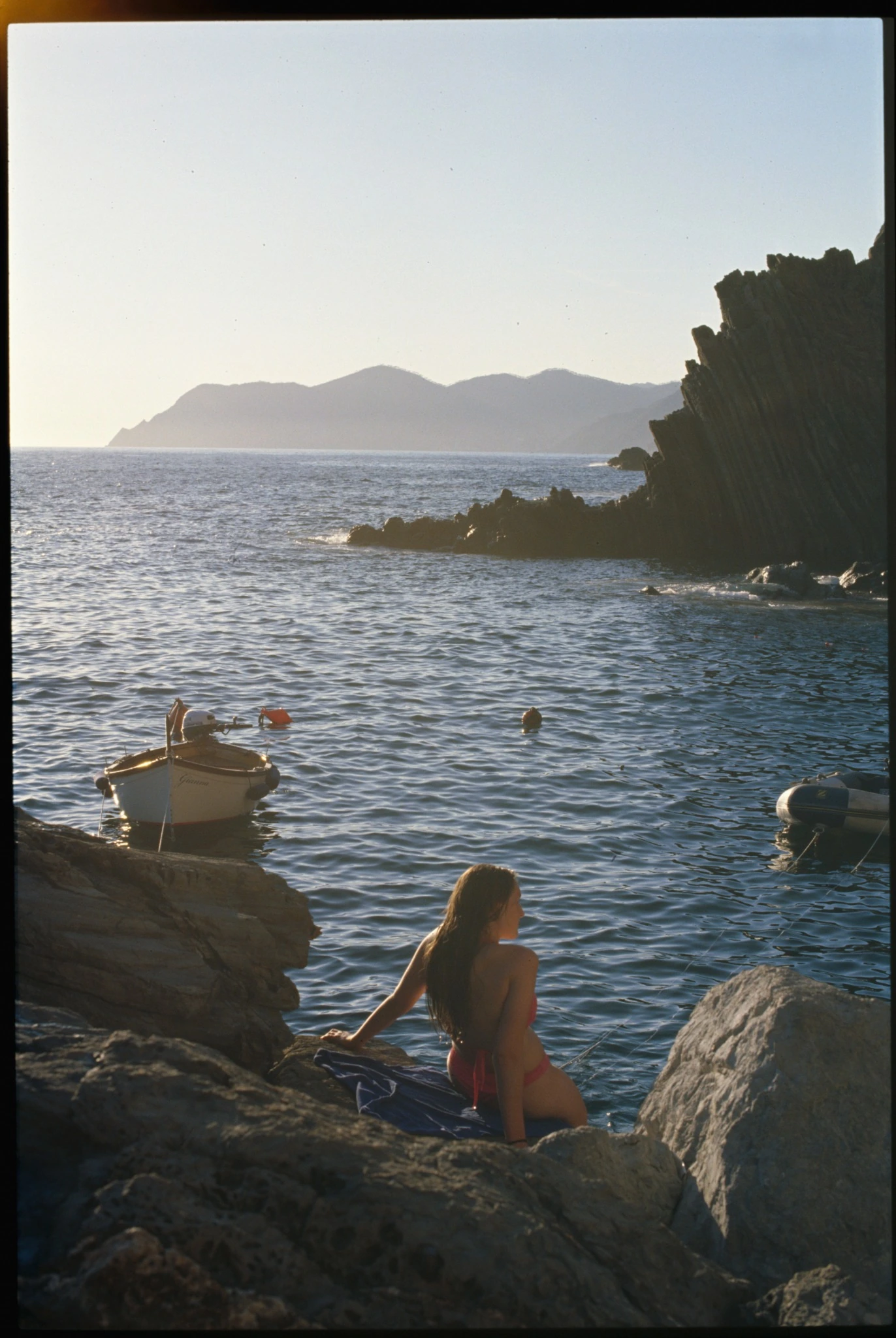
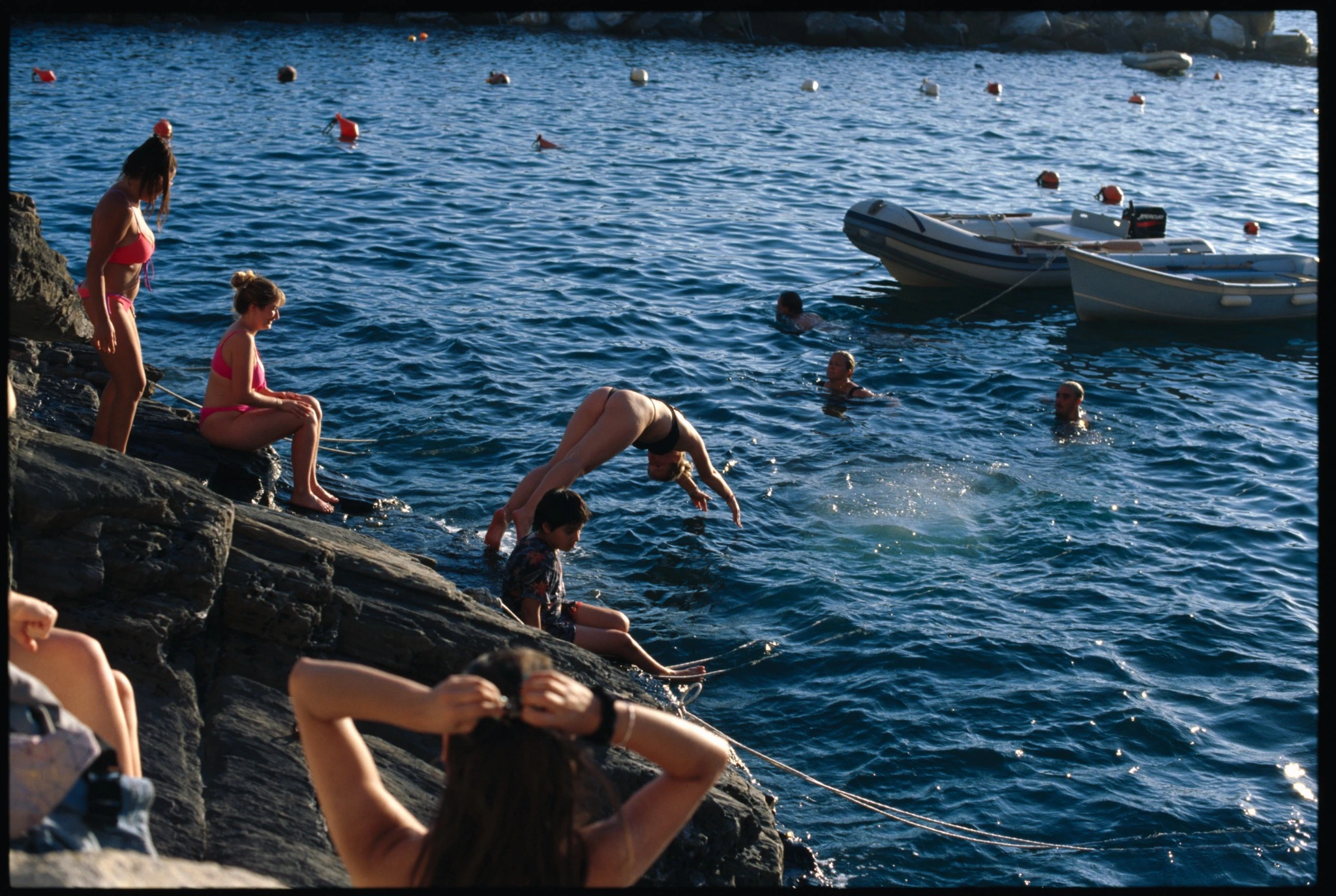
These photographs were made on Kodak Ektachrome E100 with a Nikon F80 and Nikkor 24–70mm f/2.8. Most are from an evening in Cinque Terre; the final two are from the Baltic coast.
The point of showing them together is the scan. Every image here is straight from the scanner. No post-scan colour correction, no curves, no extra saturation and no attempt to manufacture a film look afterwards.
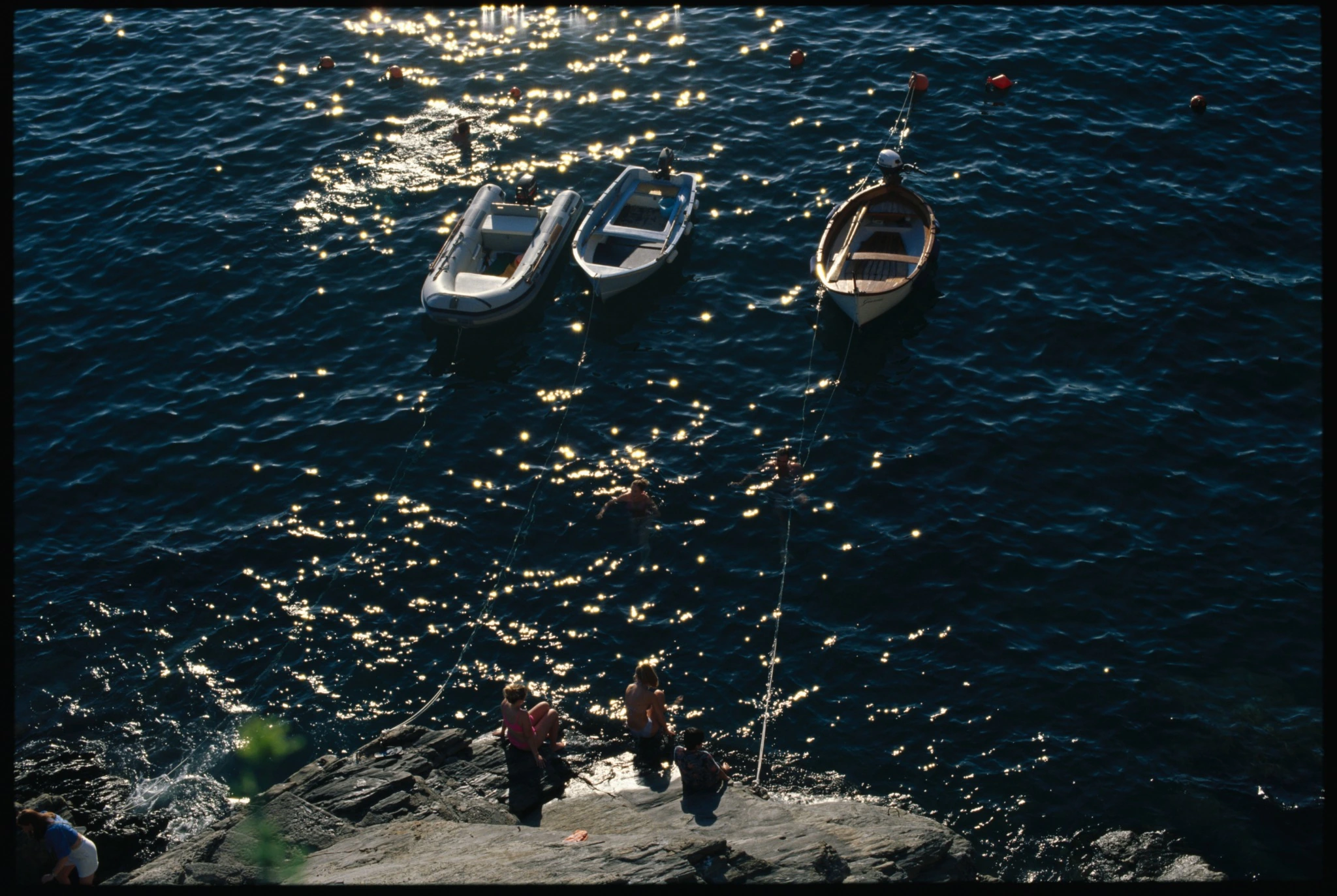
What a good E100 scan should preserve
E100 already contains strong colour, clean tonal separation and precise highlights. A high-quality scan should preserve those things rather than rebuild them later.
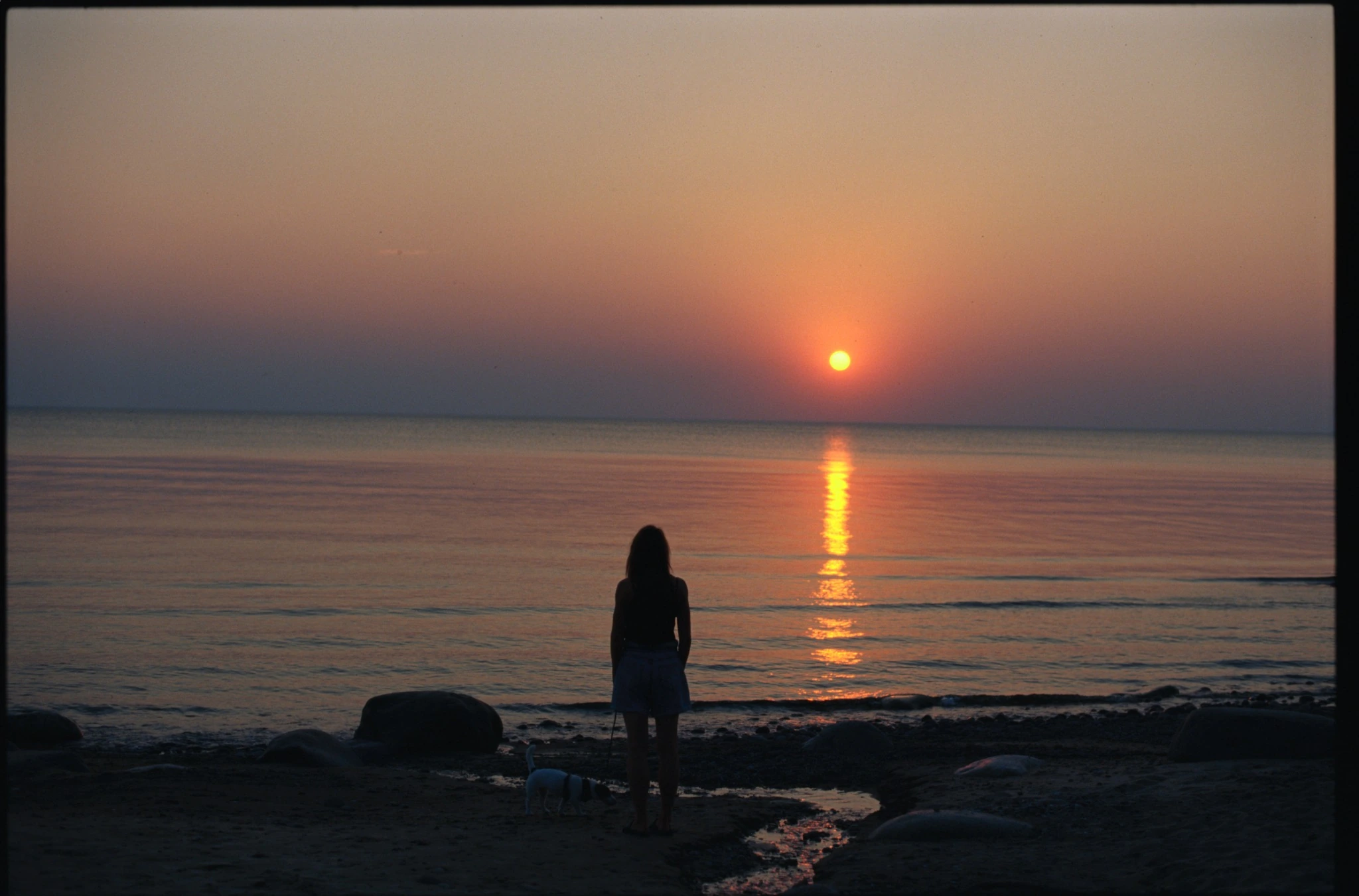
The water is the clearest example. Deep blue sits beside hundreds of tiny reflections from the sun. Some are white, some silver, some warm gold. They remain separate instead of collapsing into flat white patches.
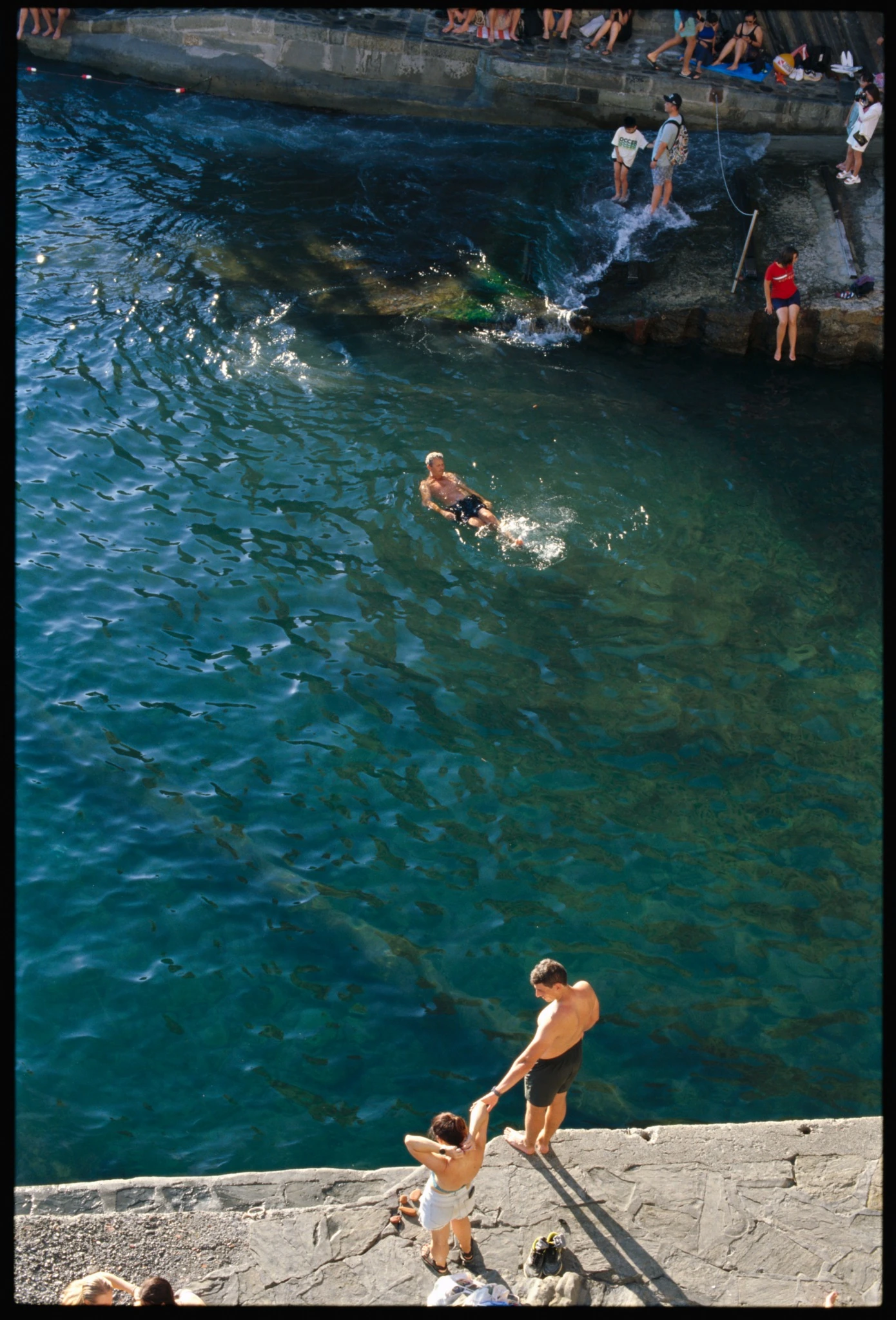
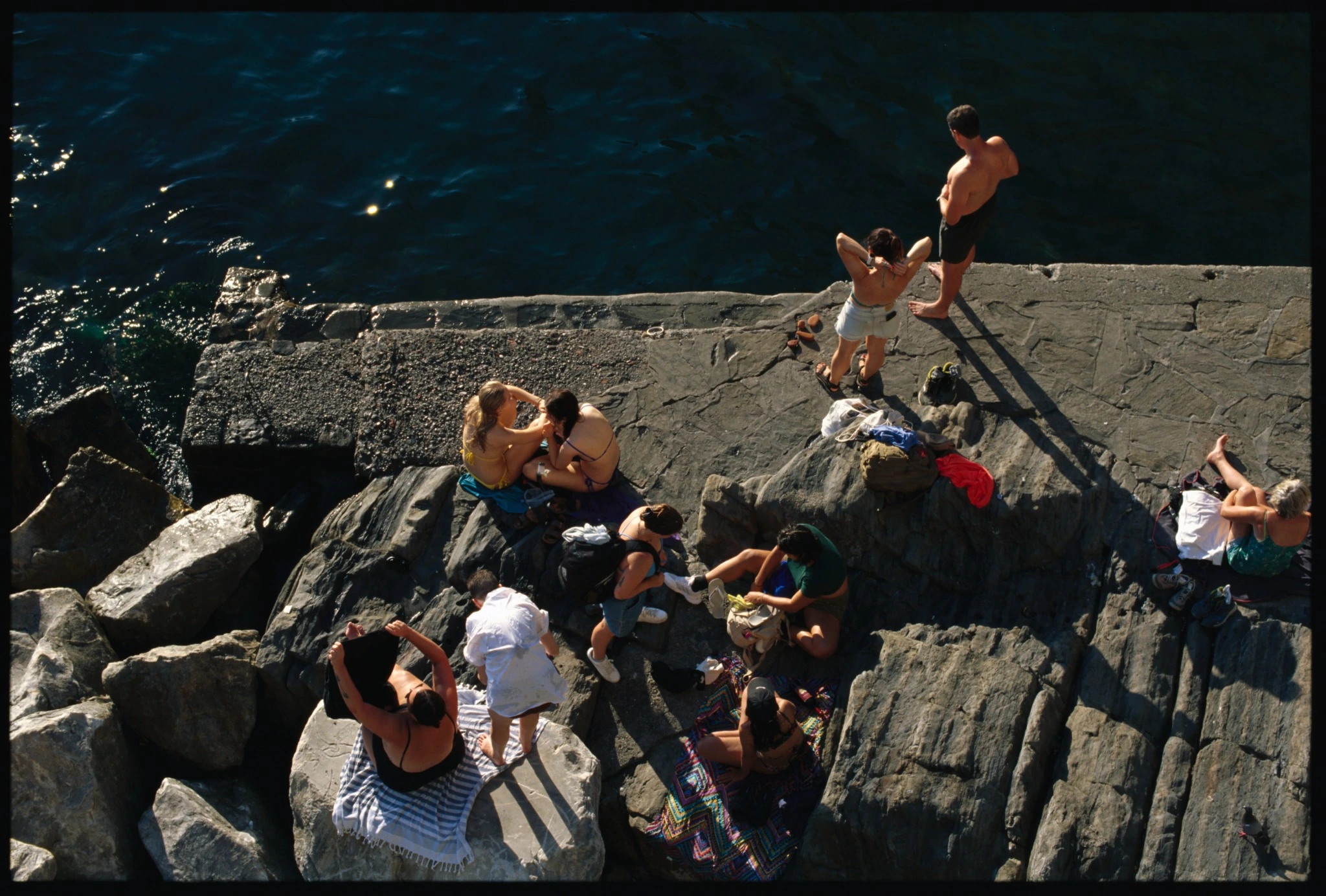

The colour is already on the transparency. The scanner’s job is to keep it there.
Wet-mounted, 16-bit Lab
These transparencies were wet-mounted on a Heidelberg Tango and scanned at approximately 4000 × 6000 pixels in 16-bit Lab. Wet mounting keeps the film flat, reduces the visual effect of small surface marks and gives the scanner a stable optical path through the film.
The 16-bit Lab master keeps plenty of tonal and colour information for printing, reproduction and later work. But these photographs did not need that headroom to rescue them. They are shown here without post-scan adjustments.
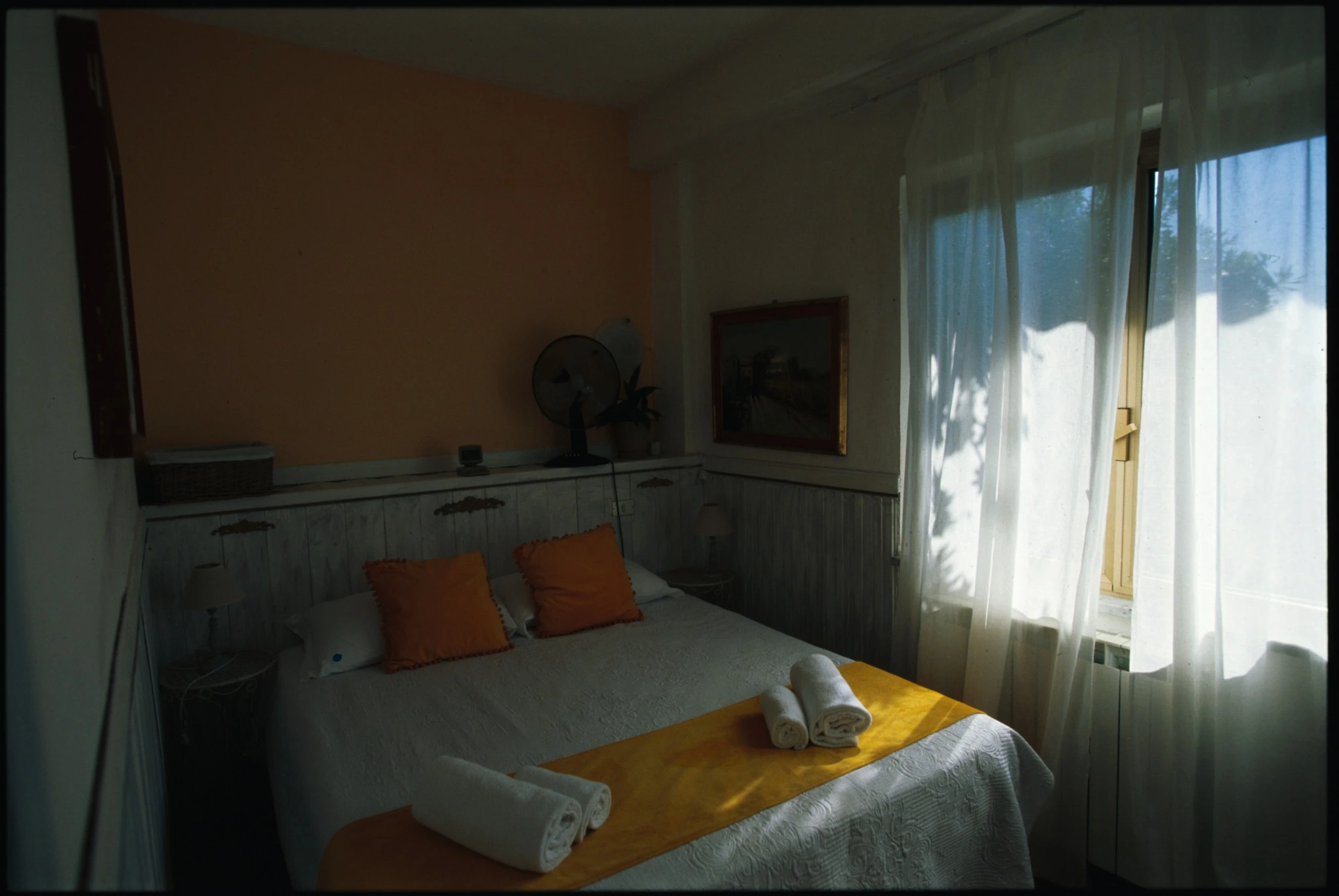
Slide film makes the comparison honest
With colour negative film, conversion always involves interpretation. Slide film is different. The developed E100 transparency is already a positive image, so it can sit on a light table beside the scan as a physical reference.
If the blue is wrong, you can see it. If the highlights are clipped, you can see it. If the colour balance drifts, you can see that too.
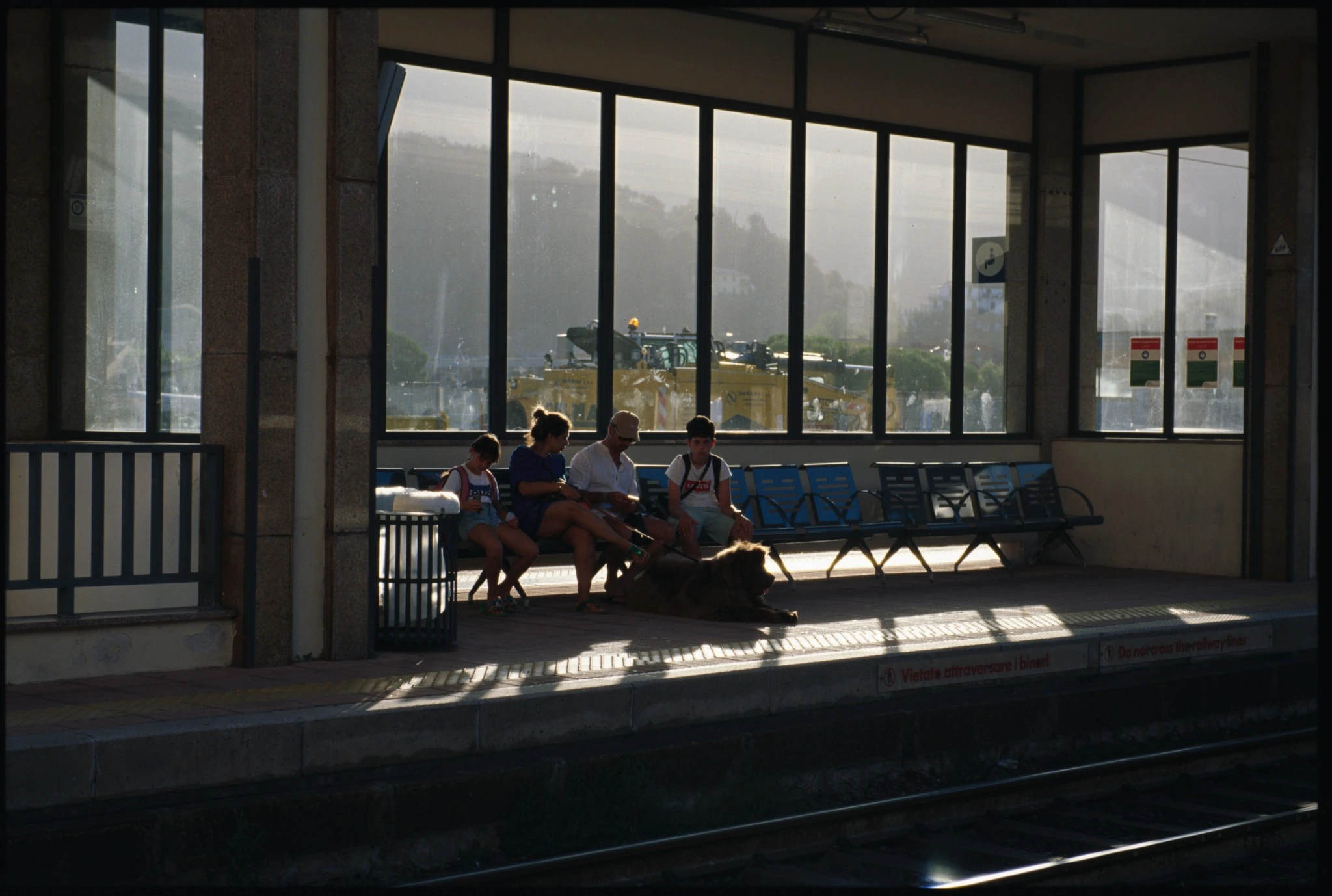
That direct reference is one reason transparency film is so useful when judging scan quality.
Same film, very different light
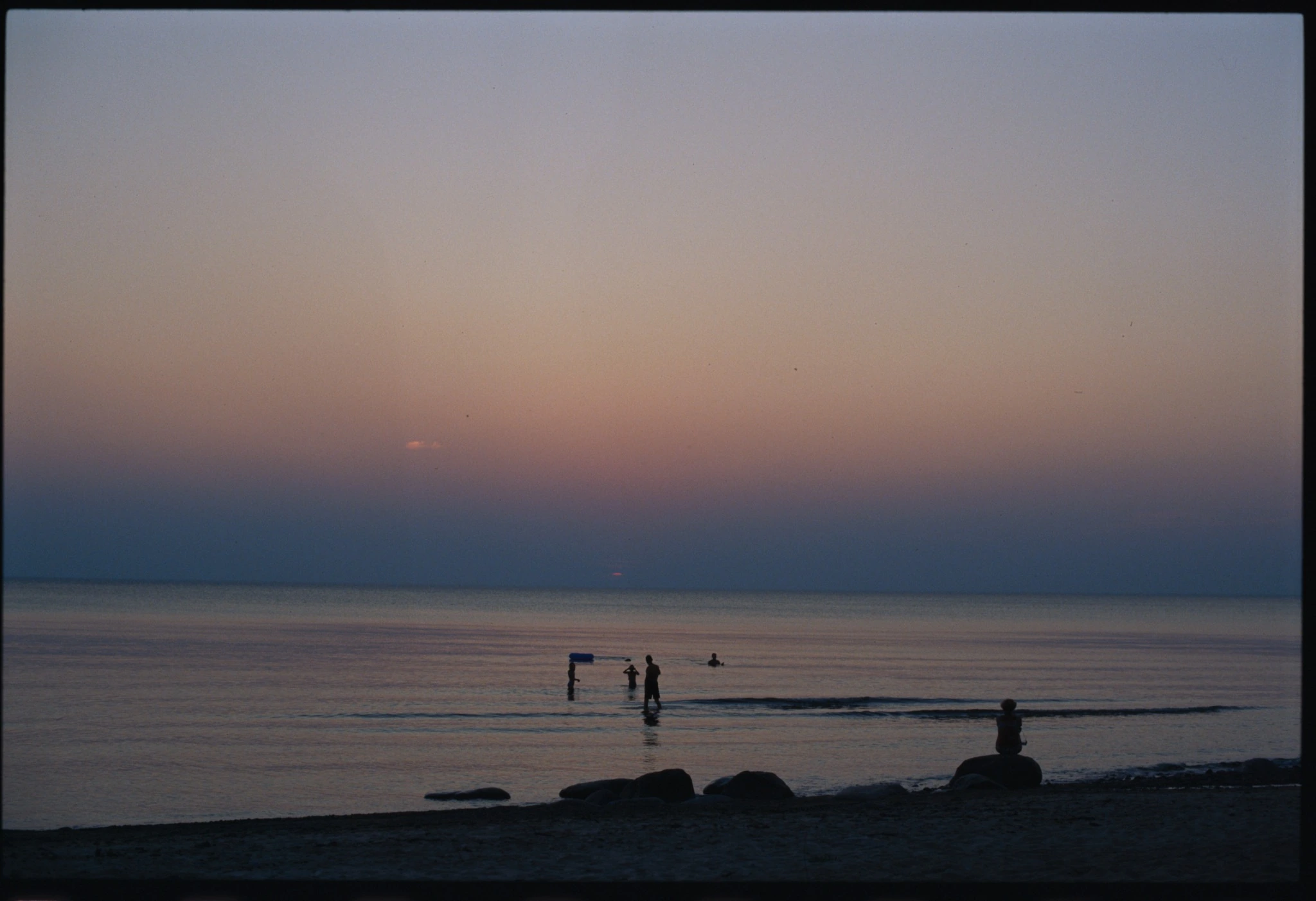
The last two frames were made on the Baltic coast, not in Italy. The cooler dusk and softer northern light look completely different from the saturated Mediterranean evening, and that is exactly why I included them.
The scan has not imposed one colour style across the series. E100 responds to the light that was actually there.
Wet scan versus dry scan
Earlier I scanned another roll of Kodak E100 dry on the Heidelberg Tango. That experiment produced a slightly softer rendering and a subtle glow around bright, high-contrast areas.
You can compare it with this wet-mounted set in When a Softer Scan Is the Better Scan: Kodak E100 on a Heidelberg Tango.
For a quick single-image reference, see the Kodak E100 drum scan example.
High-quality film scanning is not about making the film look impressive. The photograph is already there. The scanner should preserve it.
Camera: Nikon F80
Lens: Nikkor 24–70mm f/2.8
Film: Kodak Ektachrome E100
Scanner: Heidelberg Tango
Scanning: wet-mounted
Master: approx. 4000 × 6000px, 16-bit Lab
Post-scan colour adjustments: none


